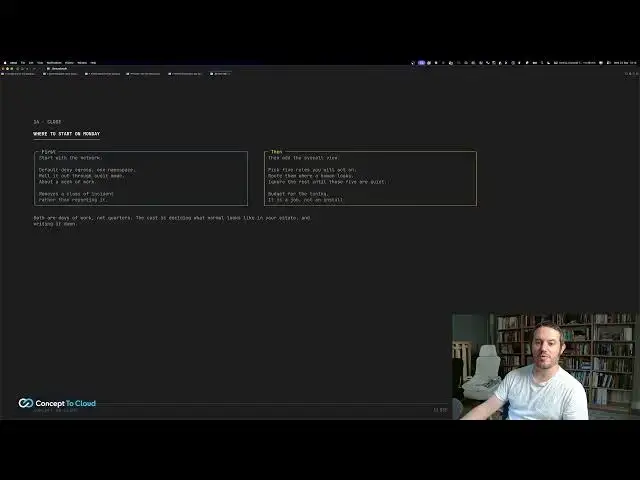

Runtime Security for Regulated Teams: Falco, eBPF & Cilium
Sep 24, 2026
A pod called payments passes every admission policy from last week's stream. It isn't privileged, it has its owner labels, a pinned image from an approved registry, resource limits, no host mounts. It's legitimately compliant. Then someone opens a shell in it, reads the password file, drops a binary that was never in the image and walks over to the HR database. No admission webhook was ever going to see any of that.
Admission control asks one question, once: should this exist? Runtime security asks the other one, for as long as the thing runs: what is it doing? Most teams I walk into have a good answer to the first and no answer at all to the second, and most control frameworks want both.
This is a live build on a real cluster. Cilium is the network, Falco is watching the syscalls, and I attack the same pod eight different ways to show which tool notices and which one stops it. Nothing is a mock-up: the slides read the rules and identities straight out of the running cluster.
The through-line: Falco detects but never blocks. Cilium blocks, and Hubble records every verdict with both ends named by pod. They answer different questions, and anyone selling you one box that does both is selling you two things in a box.
Chapters
0:00 Intro
3:05 Who I am, and the half last week left out
5:41 The problem: a pod that passes every policy
9:37 Should this exist, vs what is it doing
10:39 The regulated angle
11:38 eBPF in plain English
14:20 Falco: eBPF on syscalls
15:40 Falco detects, it does not block
16:52 Cilium: policy by identity, not IP address
18:20 Cilium blocks, and Hubble records it
19:56 One attack, two answers
22:09 The demo: eight ways to attack one pod
22:56 #0 The legitimate call
24:01 #1 A shell in the container
25:16 #2 Reading the shadow file
26:18 #3 A binary that was never in the image
27:30 #4 A custom rule for your own estate
28:28 #5 Calling out to the internet
29:35 #6 Lateral movement to the HR database
31:05 #7 The Kubernetes API, and an untuned rule
32:59 Network policy in audit mode
34:48 Enforce: the HR database call is dropped
36:22 Why Falco went quiet after enforcement
38:01 The results in one table
38:40 Detection vs prevention
39:08 What happens when each agent dies
40:27 Nobody turns on default deny at 4pm on a Friday
41:33 What this buys a regulated team
43:00 Where this falls short
45:19 Where to start on Monday
46:15 Back where we started
47:08 The two minute check to do this afternoon
47:36 Book a discovery call
The one thing worth doing this afternoon: pick your busiest namespace and run kubectl get netpol. If the answer is zero, and for a lot of people it will be, every pod in there can reach every other pod and everything else on your network right now.
Last week's livestream, on policy as code with OPA Gatekeeper and Kyverno, referenced throughout this one:
https://youtu.be/Cz_Bgg8wedM
Falco: https://falco.org
Cilium: https://cilium.io
Tom Barber: https://linkedin.com/in/tombarber
Want this done properly for your own cluster? What you can detect today, what can reach what, which five rules are worth turning on, and what you put in front of an assessor when they ask. That is what a discovery call is for. It is free, and it comes to me rather than to a form.
https://concepttocloud.com or tom@concepttocloud.com
Concept To Cloud builds production data and compliance platforms for regulated, data-heavy organisations.
#kubernetes #falco #cilium #ebpf #runtimesecurity #devsecops
Show More Show Less #Arts & Entertainment